
How Cloud Accounting Software Helps UK Businesses Save Time and Stay HMRC Compliant
Home / Post Detail
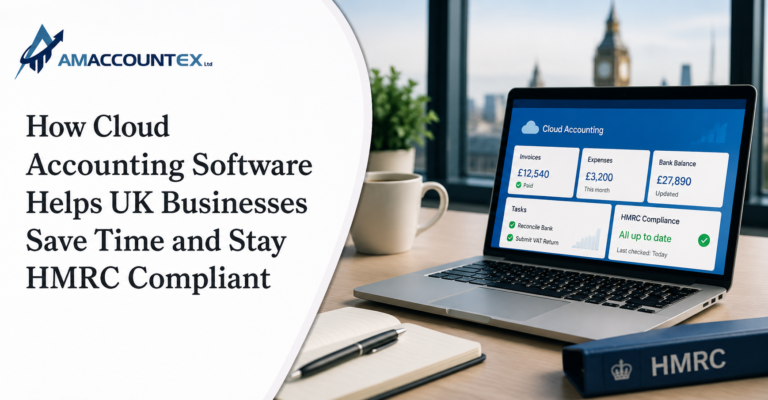
Managing a business in today’s increasingly digital economy requires more than simply keeping accurate records. UK business owners must navigate evolving HMRC regulations, maintain healthy cash flow, manage expenses, issue invoices, and make informed financial decisions that support long-term growth.
With the continued rollout of Making Tax Digital (MTD), traditional bookkeeping methods are rapidly becoming outdated. Businesses that continue to rely on spreadsheets and manual processes risk inefficiencies, compliance issues, and missed opportunities.
Cloud accounting software offers a smarter solution. Modern platforms provide real-time financial visibility, automate repetitive bookkeeping tasks, simplify tax compliance, and enable seamless collaboration between businesses and their accountants.
Whether you are a sole trader, freelancer, limited company, or growing SME, adopting cloud accounting software can significantly improve efficiency, reduce administrative burden, and help you make better business decisions.
What Is Cloud Accounting Software?
Cloud accounting software is an online accounting system that stores financial data securely in the cloud rather than on a local computer. Users can access their accounts on any internet-connected device, allowing them to manage their finances from anywhere, at any time.
Unlike traditional desktop software, cloud platforms automatically update, integrate with banking systems, and provide real-time access to financial information for both business owners and accountants.
Popular cloud accounting platforms used throughout the UK include:
- Xero
- QuickBooks Online
- FreeAgent
- Sage Accounting
These platforms are designed to support businesses of all sizes while ensuring compliance with HMRC’s digital reporting requirements.
Key Benefits of Cloud Accounting Software
Businesses that implement cloud accounting systems typically experience improvements across several areas of financial management.
Real-Time Financial Visibility
Cloud software provides instant access to key financial reports, including:
- Profit and loss statements
- Balance sheets
- Cash flow reports
- VAT summaries
- Debtor and creditor reports
Rather than waiting for month-end reports, business owners can monitor financial performance in real time and make decisions based on up-to-date information.
Automated Bookkeeping
Manual data entry is one of the most time-consuming aspects of bookkeeping.
Cloud accounting platforms automate many routine processes through:
- Bank feed integrations
- Transaction matching
- Automated reconciliations
- Recurring invoice creation
- Scheduled payment reminders
Automation reduces errors, saves valuable time, and allows businesses to focus on growth rather than administration.
Improved Cash Flow Management
Cash flow remains one of the biggest challenges facing UK businesses.
Cloud accounting software helps businesses maintain stronger cash flow by providing:
- Real-time cash position monitoring
- Automated invoice reminders
- Online payment options
- Outstanding invoice tracking
- Cash flow forecasting tools
With greater visibility over incoming and outgoing funds, business owners can identify potential issues before they become serious problems.
Making Tax Digital and HMRC Compliance
One of the primary reasons UK businesses are adopting cloud accounting software is the government’s Making Tax Digital initiative.
MTD for VAT
Since April 2022, all VAT-registered businesses have been required to:
- Maintain digital VAT records
- Use compatible accounting software
- Submit VAT returns digitally to HMRC
Businesses relying solely on manual records or disconnected spreadsheets may not meet HMRC’s requirements.
MTD for Income Tax
From April 2026, many self-employed individuals and landlords will need to comply with Making Tax Digital for Income Tax Self Assessment (MTD ITSA).
This will require:
- Digital record keeping
- Quarterly reporting to HMRC
- End-of-period submissions through approved software
Businesses that implement cloud accounting software early will be better prepared for these changes and less likely to encounter compliance issues.
Faster Invoicing and Quicker Payments
Late payments continue to affect thousands of UK businesses each year.
Cloud accounting software helps accelerate payment collection through:
- Professional digital invoices
- Automated payment reminders
- Recurring billing options
- Integrated payment links
- Online payment processing
Customers can pay directly from invoices using bank transfers, debit cards, credit cards, PayPal, Stripe, and other payment methods.
This streamlined process often leads to faster payment cycles and improved cash flow.
Simplified Expense Management
Tracking business expenses manually can be frustrating and time-consuming.
Modern accounting systems simplify expense management through mobile applications and receipt capture technology.
Popular solutions such as Dext, Xero Expenses, and QuickBooks Receipt Capture allow users to:
- Photograph receipts using a smartphone
- Automatically extract supplier information
- Categorise expenses
- Store digital records securely
- Maintain HMRC-compliant documentation
This creates a paperless process that saves time and reduces administrative workload.
The Growing Role of AI in Accounting
Artificial intelligence is transforming bookkeeping and financial management.
Today’s cloud accounting platforms increasingly use AI to automate routine accounting tasks and improve financial insights.
Automated Transaction Categorisation
AI can analyse spending patterns and automatically assign categories to transactions, reducing manual bookkeeping work.
Cash Flow Forecasting
Advanced forecasting tools help businesses predict future cash flow based on historical data, unpaid invoices, and expected expenses.
Error Detection
AI-powered systems can identify:
- Duplicate transactions
- Unusual spending patterns
- Reconciliation discrepancies
- Potential bookkeeping errors
This improves the accuracy and reliability of financial records.
Business Intelligence
Automated reporting tools help business owners understand:
- Profitability trends
- Customer performance
- Product margins
- Department performance
- Financial forecasting opportunities
These insights support faster and more informed decision-making.
Better Collaboration with Your Accountant
Cloud accounting software transforms the relationship between business owners and accountants.
Because both parties access the same live financial data, accountants can:
- Provide proactive advice
- Review transactions in real time
- Prepare VAT returns efficiently
- Support tax planning strategies
- Deliver more accurate financial reporting
Instead of spending time correcting bookkeeping records, accountants can focus on helping businesses improve profitability, reduce tax liabilities, and plan for future growth.
Is Cloud Accounting Software Worth the Cost?
Many business owners hesitate because of subscription fees. However, when measured against the time savings and efficiency gains, cloud accounting software often delivers a strong return on investment.
Typical monthly costs range from:
- £10–£15 for sole traders and freelancers
- £20–£40 for small businesses
- £40–£60+ for larger companies with advanced requirements
The benefits frequently outweigh the costs through:
- Reduced administrative time
- Improved accuracy
- Faster payments
- Better compliance
- Lower accounting costs
- Enhanced financial visibility
For most businesses, the value generated significantly exceeds the subscription fee.
Common Mistakes to Avoid
Businesses often make avoidable mistakes when implementing new accounting systems.
Choosing the Wrong Software
Different businesses have different requirements. A freelancer’s needs differ significantly from those of a VAT-registered limited company.
Professional advice can help ensure the right platform is selected from the start.
Poor Initial Setup
Incorrect chart of accounts structures, VAT settings, or bank feed configurations can create long-term problems.
Proper implementation is essential.
Insufficient Training
Even user-friendly software requires some training. Staff should understand how to use the system correctly to maintain accurate records.
Ignoring Compliance Requirements
Businesses should ensure their chosen software remains fully compliant with current HMRC and Making Tax Digital requirements.
Why Professional Accountants Still Matter
Although accounting software has become increasingly sophisticated, technology cannot replace the expertise of a qualified accountant.
Professional accountants provide:
- Tax planning advice
- Business strategy support
- Financial forecasting
- Compliance oversight
- Funding and growth guidance
- HMRC representation when needed
The most successful businesses combine modern accounting technology with professional financial expertise.
Frequently Asked Questions
Is cloud accounting software suitable for small businesses?
Yes. Most modern platforms are designed specifically for small businesses, freelancers, and sole traders, offering affordable plans and user-friendly features.
Which accounting software works with Making Tax Digital?
Leading MTD-compatible platforms include Xero, QuickBooks Online, FreeAgent, and Sage Accounting.
Can cloud accounting software replace an accountant?
No. Software can automate bookkeeping and reporting tasks, but it cannot replace professional judgement, tax-planning expertise, or strategic business advice.
How much does cloud accounting software cost?
Costs typically range from £10 to £60 per month, depending on the platform and required features.
What are the main advantages of digital bookkeeping?
Digital bookkeeping improves accuracy, saves time, supports HMRC compliance, reduces paperwork, and provides real-time financial visibility.
Conclusion
Cloud accounting software has become an essential tool for UK businesses seeking greater efficiency, stronger compliance, and better financial control.
As Making Tax Digital continues to expand, businesses that embrace digital accounting solutions will be better positioned to meet regulatory requirements, improve productivity, and support sustainable growth.
By combining the right technology with expert accounting support, businesses can reduce administrative burden, gain valuable financial insights, and focus on what matters most: growing their business with confidence.
At AMACCOUNTEX LTD, we specialise in supporting small businesses, sole traders, freelancers, contractors, and limited companies across the UK with reliable and affordable accountancy services. Our Chartered Certified Accountants can help with self-assessment tax returns, self-employed accounts, small company accounts, corporation tax returns, VAT returns, payroll services, company confirmation statements, bookkeeping, and director tax returns. We are also authorised to carry out Companies House identity verification services for company directors, including foreign director ID verification.
Recent Blog


